


Classic Shemale Gallery 🔥

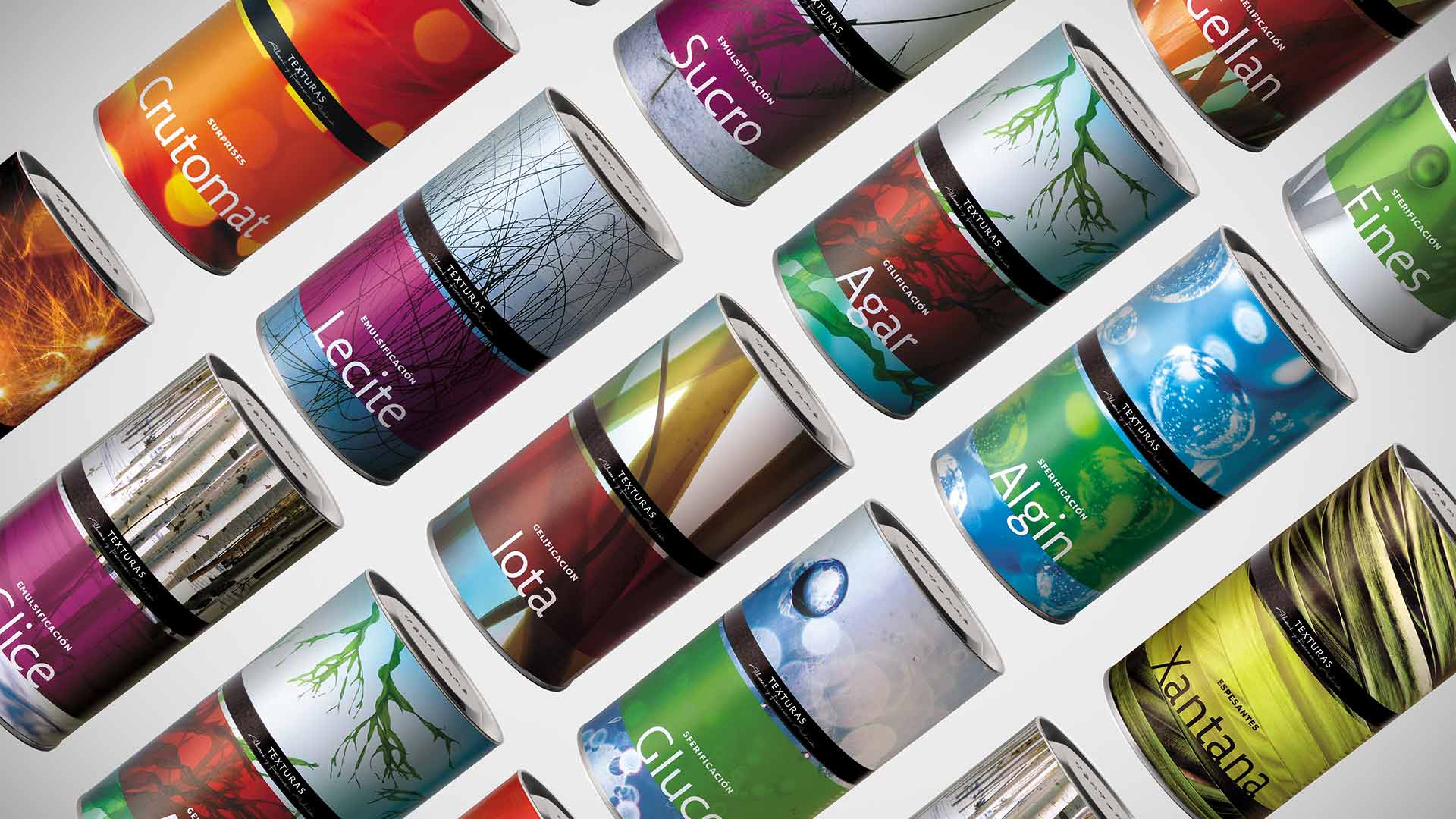
Since its creation in 1997, elBullitaller’s aim has been to expand the range of textures that can be used in the kitchen. As a result of this research, techniques such as foams, clouds, etc. have been created, representing an evolution in his style.
The Texturas range is essential if you want to incorporate some of our most famous techniques into your kitchen, such as hot jellies, air, gelatine caviar or spherical ravioli.
The products that make up the five families – Spherification, Gelification, Emulsification, Thickeners and Surprises – are the result of a rigorous selection and testing process. Texturas is the beginning of a world of magical sensations that has expanded over the years.
SFERIFICATION
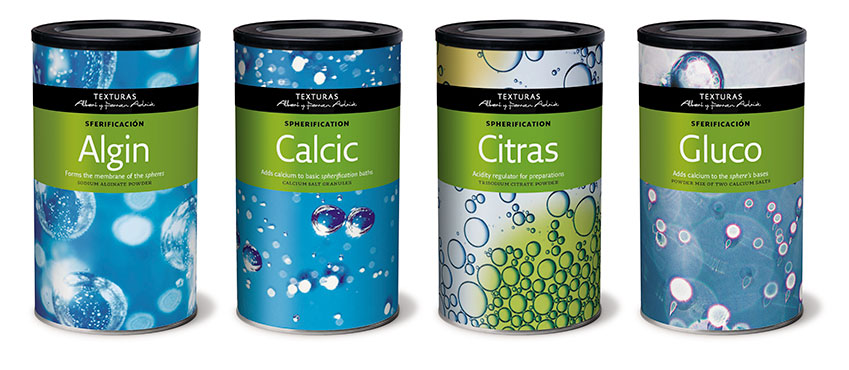
Spherification is a spectacular culinary technique, introduced at elBulli in 2003, that allows you to create recipes never before imagined. It is the controlled gelling of a liquid which, when immersed in a bath, forms spheres. There are two types: Basic Spherification (which consists of immersing a liquid with algin in a calcic bath) and Reverse Spherification (immersing a liquid with gluco in an algin bath). These techniques make it possible to obtain spheres of different sizes: caviar, eggs, gnocchi, ravioli… In both techniques, the spheres obtained can be manipulated as they are slightly flexible. We can introduce solid elements into the spheres, which remain suspended in the liquid, thus obtaining two or more flavours in one preparation. In basic spherification, some ingredients require the use of citrus to correct the acidity; in reverse spherification, xanthan is usually used to thicken. Spherification requires the use of specific tools, which are included in the kits.
GELLING
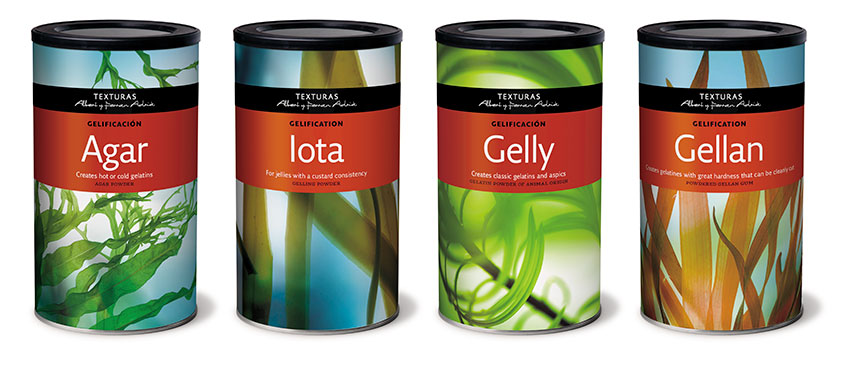
Jellies are one of the most characteristic preparations of classical cuisine and have evolved with modern cuisine. Until a few years ago, they were mainly made with gelatin sheets (known as “fish tails”); since 1997, agar, a derivative of seaweed, has been used.
The kappa and iota carrageenans are also obtained from seaweed and have specific properties of elasticity and firmness that give them their own personality.
To complete the family, we present gellan, which makes it possible to obtain a rigid and firm gel, and methyl, with high gelling power and great reliability.
EMULSIFICATION
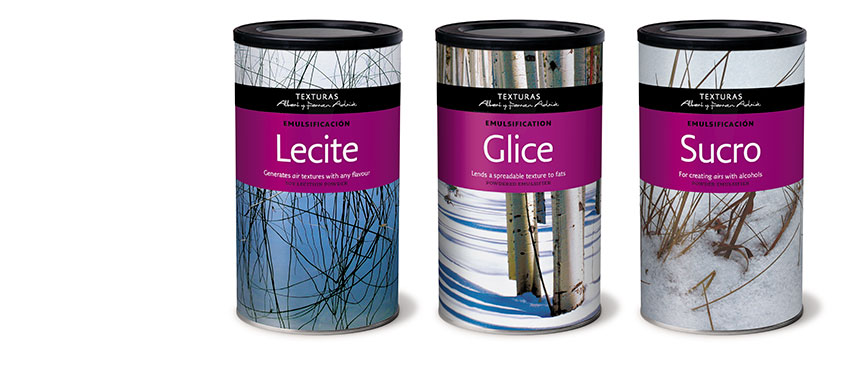
The Lecite product, which is used to make aerated preparations, has been joined by two other products, Sucro and Glice. The main feature of the latter is its ability to combine two phases that cannot be mixed, such as fatty and aqueous media. This makes it possible to create emulsions that would otherwise be very difficult to achieve.
THICKENERS
Products have always been used in the kitchen to thicken sauces, creams, juices, soups, etc. Starch, cornstarch, flour are the traditional thickeners used, with the disadvantage that a significant amount has to be added, which affects the final flavour.
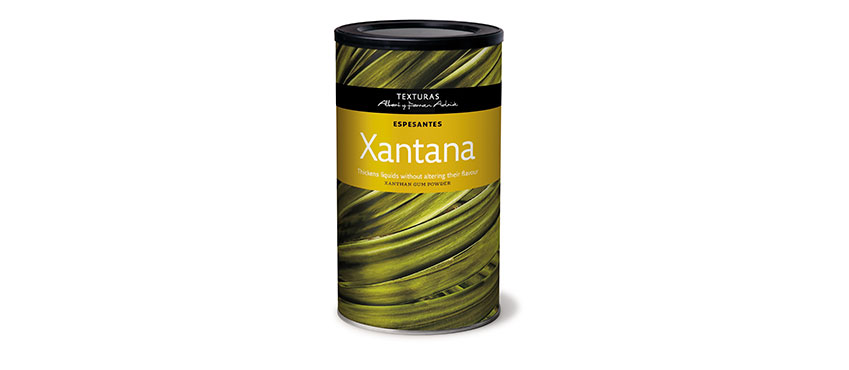
With the Xantana family of thickeners, we present a new product capable of thickening cooking preparations with a minimum quantity and without altering the initial flavour characteristics in any way.
SURPRISES
It is a line of products whose main characteristic is the possibility of consuming them directly, either on their own or mixed with other ingredients and preparations.
These are products with different characteristics, but with a common denominator, their special texture, specific and unique to each of them, effervescent in the case of Fizzy, Malto and Yopol, and crunchy in Crumiel, Trisol and Crutomat. Flavours and textures that can be a fantastic and surprising solution for refining both sweet and savoury recipes.

OTHER PRODUCTS
The transgender community is not a separate wing of the LGBTQ+ movement; it is its conscience—pushing, challenging, and expanding the rainbow until it truly reflects every shade of human diversity.
As legal attacks on transgender youth intensify in various parts of the world, the broader LGBTQ+ community has largely rallied in fierce defense. In turn, trans activists continue to honor the legacy of Stonewall by reminding everyone that Pride is not a celebration of assimilation, but a rebellion against all forms of gender oppression.
For the majority, the integration is deepening. Many young people now come out as "queer" rather than strictly "gay" or "trans," blending sexual orientation and gender identity into a single, fluid experience. Trans and non-binary people are increasingly visible as drag performers, gay bar owners, and community leaders, even as they maintain distinct needs regarding medical transition and legal recognition. The future of LGBTQ+ culture lies in accepting that trans rights and gay rights are not identical, but inseparable. A gay man may not share a trans woman’s need for hormone therapy, but he shares her vulnerability to state-sanctioned violence and social ostracism for defying cisheteronormative expectations. classic shemale gallery
Today, a more common friction is the debate over the "LGB without the T" movement—a small but vocal minority of gay and lesbian individuals who argue that transgender issues are separate from sexuality-based issues. Mainstream LGBTQ+ organizations overwhelmingly reject this, arguing that the same bigoted impulse (the desire to enforce biological essentialism) targets both gay and trans people.
As legal battles over bathroom bills, sports participation, and healthcare bans have dominated headlines, the trans community has become the front line of LGBTQ+ resistance. Consequently, Pride parades, once criticized as becoming too "corporate" and assimilationist, have been re-energized by trans-led protests and direct action groups. The focus has shifted from asking for acceptance to demanding liberation. Points of Friction and Growth The relationship is not without its tensions. A painful chapter in LGBTQ+ history involves the exclusion of trans people from some lesbian feminist spaces in the 1970s and 1980s, where some argued that trans women were "infiltrators" rather than authentic women. While those views are now fringe, echoes remain. The transgender community is not a separate wing
The transgender community has always existed, yet for much of modern history, its distinct identity was often overshadowed or conflated with homosexuality within the broader LGBTQ+ movement. Today, the "T" at the heart of the acronym is no longer a silent passenger. It has become a powerful, visible force reshaping LGBTQ+ culture from the inside out—sometimes harmoniously, sometimes with friction, but always moving toward a more expansive understanding of identity. A Shared but Complicated History The alliance between transgender people and the rest of the LGBTQ+ community is not a modern invention; it was forged in struggle. The 1969 Stonewall Uprising, widely considered the birth of the modern gay rights movement, was led by trans women of color like Marsha P. Johnson and Sylvia Rivera. These activists fought not just for the right to love the same gender, but for the right to exist publicly in their authentic gender expression—something that was violently criminalized at the time.
For decades, the "T" was included under the gay rights umbrella largely out of strategic necessity. In the era of the HIV/AIDS crisis, gay men, lesbians, bisexuals, and transgender people were all targeted by the same moral panics. However, the mainstream gay rights movement of the 1990s and 2000s often pursued a "respectability politics" strategy, prioritizing marriage equality and military service—issues that resonated with cisgender (non-trans) gay people while sometimes sidelining the more radical needs of the trans community, such as healthcare access and protection from employment discrimination based on gender identity. Today, transgender voices are not just participants in LGBTQ+ culture—they are redefining its core tenets. For the majority, the integration is deepening
Terms like "gender dysphoria," "gender euphoria," "passing," and "deadnaming" have migrated from trans-specific spaces into general LGBTQ+ vocabulary. The emphasis on pronouns (he/him, she/her, they/them) has become a cultural norm within queer spaces, promoting a universal standard of consent and respect that benefits everyone.
The transgender community is not a separate wing of the LGBTQ+ movement; it is its conscience—pushing, challenging, and expanding the rainbow until it truly reflects every shade of human diversity.
As legal attacks on transgender youth intensify in various parts of the world, the broader LGBTQ+ community has largely rallied in fierce defense. In turn, trans activists continue to honor the legacy of Stonewall by reminding everyone that Pride is not a celebration of assimilation, but a rebellion against all forms of gender oppression.
For the majority, the integration is deepening. Many young people now come out as "queer" rather than strictly "gay" or "trans," blending sexual orientation and gender identity into a single, fluid experience. Trans and non-binary people are increasingly visible as drag performers, gay bar owners, and community leaders, even as they maintain distinct needs regarding medical transition and legal recognition. The future of LGBTQ+ culture lies in accepting that trans rights and gay rights are not identical, but inseparable. A gay man may not share a trans woman’s need for hormone therapy, but he shares her vulnerability to state-sanctioned violence and social ostracism for defying cisheteronormative expectations.
Today, a more common friction is the debate over the "LGB without the T" movement—a small but vocal minority of gay and lesbian individuals who argue that transgender issues are separate from sexuality-based issues. Mainstream LGBTQ+ organizations overwhelmingly reject this, arguing that the same bigoted impulse (the desire to enforce biological essentialism) targets both gay and trans people.
As legal battles over bathroom bills, sports participation, and healthcare bans have dominated headlines, the trans community has become the front line of LGBTQ+ resistance. Consequently, Pride parades, once criticized as becoming too "corporate" and assimilationist, have been re-energized by trans-led protests and direct action groups. The focus has shifted from asking for acceptance to demanding liberation. Points of Friction and Growth The relationship is not without its tensions. A painful chapter in LGBTQ+ history involves the exclusion of trans people from some lesbian feminist spaces in the 1970s and 1980s, where some argued that trans women were "infiltrators" rather than authentic women. While those views are now fringe, echoes remain.
The transgender community has always existed, yet for much of modern history, its distinct identity was often overshadowed or conflated with homosexuality within the broader LGBTQ+ movement. Today, the "T" at the heart of the acronym is no longer a silent passenger. It has become a powerful, visible force reshaping LGBTQ+ culture from the inside out—sometimes harmoniously, sometimes with friction, but always moving toward a more expansive understanding of identity. A Shared but Complicated History The alliance between transgender people and the rest of the LGBTQ+ community is not a modern invention; it was forged in struggle. The 1969 Stonewall Uprising, widely considered the birth of the modern gay rights movement, was led by trans women of color like Marsha P. Johnson and Sylvia Rivera. These activists fought not just for the right to love the same gender, but for the right to exist publicly in their authentic gender expression—something that was violently criminalized at the time.
For decades, the "T" was included under the gay rights umbrella largely out of strategic necessity. In the era of the HIV/AIDS crisis, gay men, lesbians, bisexuals, and transgender people were all targeted by the same moral panics. However, the mainstream gay rights movement of the 1990s and 2000s often pursued a "respectability politics" strategy, prioritizing marriage equality and military service—issues that resonated with cisgender (non-trans) gay people while sometimes sidelining the more radical needs of the trans community, such as healthcare access and protection from employment discrimination based on gender identity. Today, transgender voices are not just participants in LGBTQ+ culture—they are redefining its core tenets.
Terms like "gender dysphoria," "gender euphoria," "passing," and "deadnaming" have migrated from trans-specific spaces into general LGBTQ+ vocabulary. The emphasis on pronouns (he/him, she/her, they/them) has become a cultural norm within queer spaces, promoting a universal standard of consent and respect that benefits everyone.


© Albert Adrià, 2026
%!s(int=2026) © %!d(string=Green Matrix)


