
Fundamentals of Heat and Mass Transfer
Fundamentals of Heat and Mass Transfer Fundamentals of Heat and Mass Transfer
Fundamentals of Heat and Mass Transfer Fundamentals of Heat and Mass Transfer Fundamentals of Heat and Mass Transfer Fundamentals of Heat and Mass Transfer
Reviews
“Beevor, best known for his formidable book Stalingrad, commands authority because his research is comprehensive and his conclusions free of political agenda. He is a skilled writer, but his prose is is not what makes his books special. Rather, it is the confidence that his authority conveys – one senses that he knows his subject as well as anyone. He allows his evidence to speak for itself. . . This is an unmerciful book, agonising, yet always irresistible.” Gerard DeGroot, The Times
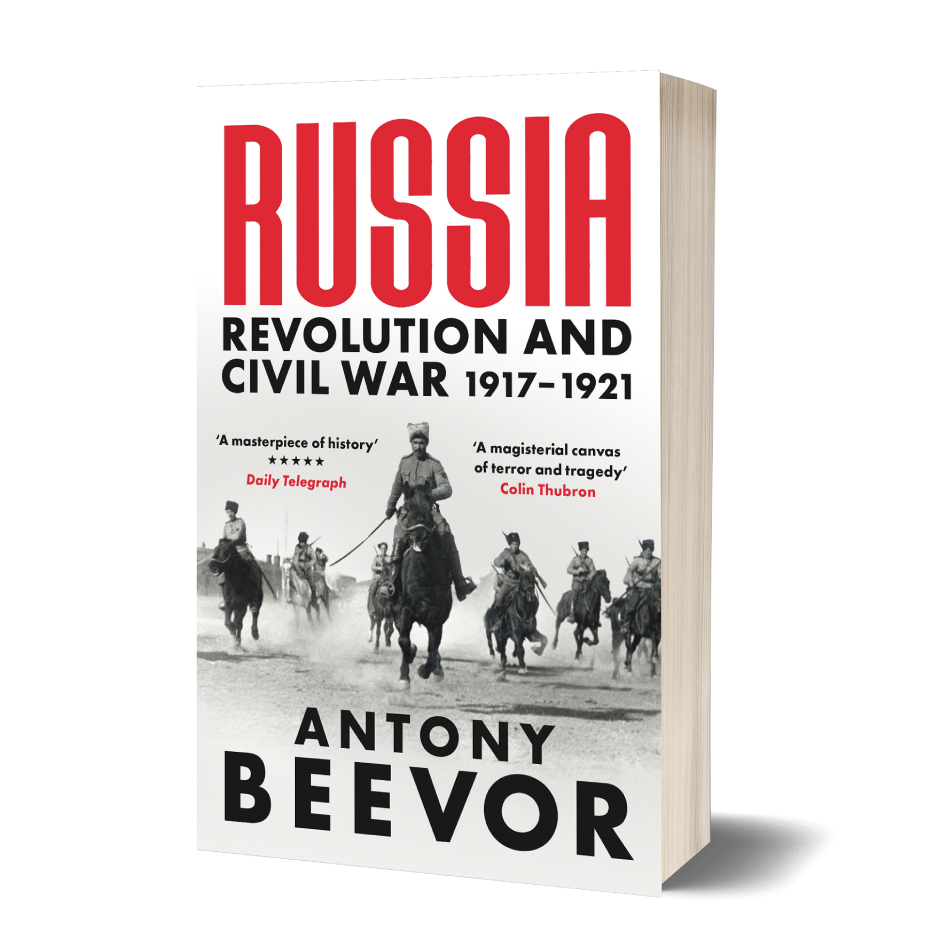
“A masterpiece of history and a harrowing lesson for today. . . Antony Beevor’s grimly magnificent new book. . . is a hugely complex story and Beevor tells it supremely well. The book is ground-breaking in its use of original evidence from many archives.” Noel Malcolm in The Daily Telegraph *****
“What makes the new book so readable is its structure. . . Beevor’s short chapters break up the action to ensure they are digestible while also pointing a clear path through the dark fog of this brutal war. . . This combination of clarity with vividness is Beevor’s defining strength as a historian.” Misha Glenny in The Sunday Times
“My book of the year has to be Antony Beevor’s magisterial Russia: Revolution and civil war, 1917-1921 which brings into harrowing focus four chaotic years in a theatre of conflict stretching from Poland to the Pacific. Often the study of this period centres on politics and ideology, but Beevor depicts the raw reality of its warfare with the skill of a military historian, buttressed by new material from Russian archives. Enfolded into the grander narrative is the experience of its humbler participants and victims, until the confusion and brutality of this time, leaving 10 million dead, attain a vivid and terrible force. It is a great achievement.” Colin Thubron in The Times Literary Supplement
“Antony Beevor’s extraordinary book strips the romance from a revolution too often idealised. . . It’s unmerciful, agonising yet irresistible.” G deGroot, The Times Book of the Year
“Antony Beevor’s Russia: Revolution and civil war, 1917-1921 is an extraordinary book, hugely impressive for its in-depth research, narrative drive and deft analysis of politics and warfare. As this grimmest of civil wars draws to a close, one ends up richly informed but stunned by the scale of human suffering, and contemplating the possibilities of many might-have-beens.” Noel Malcolm in the Times Literary Supplement
Read More
Advance Comment
“A completely riveting account of how the Russian Revolution, which started with such high hopes and idealism, degenerated into a tangle of civil conflicts marked by hideous cruelty on all sides. Antony Beevor brings his great gifts for narrative and his deep interest in the people who both make history and suffer it to illuminate that crucial period whose consequences we are still living with today.” Margaret MacMillan
“Brilliant and utterly readable” Antonia Fraser
“In Stalingrad, Berlin and The Second World War, Antony Beevor transformed military history by evoking the experiences of those who fought and suffered in some the greatest wars of the twentieth century. Now he has given us what may be his most brilliant book to date - a masterpiece of historical imagination, in which the tragedy and horror of this colossal struggle is recaptured, in its impact on everyday life as well as its military dimensions, as never before. This is a great book, whose depiction of savage inhumanity speaks powerfully to our present condition. ” John Gray
Read More
Biography

Antony Beevor: The number one bestselling historian in Britain

Beevor’s books have appeared in thirty-seven languages and have sold nine million copies. A former chairman of the Society of Authors, he has received a number of honorary doctorates. He is also a visiting professor at the University of Kent and an Honorary Fellow of King’s College, London. He was knighted in 2017.

Read More   Other Titles

Fundamentals of Heat and Mass Transfer
Speaking

Upcoming Events

See full calendar

Updates

Latest News

Fundamentals Of Heat And Mass Transfer May 2026

Fundamentals of Heat and Mass Transfer had saved them all. Not through brute force or exotic technology, but by reminding him that heat always finds a way—through solids, fluids, or empty space. And sometimes, the emptiest space of all is the one where clever engineers let physics do the heavy lifting.

Kaelen’s first instinct was conduction. “Just sink the heat into the lunar regolith,” he muttered, flipping to Chapter 3. But the numbers were brutal: lunar soil was a poor conductor. The heat would build up faster than it could diffuse. The reactor’s silicon carbide housing would reach critical temperature in under an hour. Fundamentals of Heat and Mass Transfer

Kaelen opened the emergency vent. No coolant, no moving parts—just pure electromagnetic waves carrying energy away. He watched his suit’s thermometer. The reactor’s temperature stopped climbing. Then, slowly, it began to fall. Fundamentals of Heat and Mass Transfer had saved them all

In the sprawling, silent data archives of the lunar colony Helios-1 , a young thermal engineer named Kaelen faced a crisis. A critical coolant pump in the habitat’s fusion reactor had failed. If he couldn’t remove heat from the reactor core within six hours, the emergency shutdown would freeze half the colony’s hydroponic farms. The textbook Fundamentals of Heat and Mass Transfer —dog-eared, annotated, and velcroed to his console—was his only real companion. Kaelen’s first instinct was conduction

Radiation. His last hope. Kaelen stared at the Stefan–Boltzmann law in Chapter 12. In a vacuum, radiation was the only game in town. He grabbed a roll of thin aluminized mylar—normally used for insulation—and a canister of dark, soot-like carbon powder from an old air filter.

He worked fast. Outside the airlock, in his bulky EVA suit, he spread the mylar across a twenty-meter metal frame, then coated one side with the black powder. High emissivity on one side, low absorptivity on the other. He angled the black side toward the reactor’s emergency dump port and the shiny side toward deep space. The temperature difference was extreme: the reactor’s outer casing was glowing at 800 K, space was a frigid 3 K.

He turned to convection. “Fine,” he said, pulling up schematics of the backup loop. He could vent the reactor’s secondary helium coolant into a makeshift radiator—a long, coiled tube he could snake across the crater floor. But without a pump, the helium would move by natural convection only. He ran the Grashof and Prandtl numbers in his head. The buoyancy-driven flow would be too slow. The tube would melt before the heat ever reached the far end.

Interviews & News