

Polaris is a music-making app that lets you produce electronic music right from your phone or tablet. Whether you're an experienced musician or a complete beginner, you'll feel right at home using it.
new update released
Polaris is an intuitive musical sketch pad tailored for phones and tablets so you can capture your ideas on the go. The design philosophy is simple: provide the essentials in an accessible, but powerful format to get ideas down whenever and wherever inspiration strikes. The end result is a music production app that allows you to skip the complicated learning curve of traditional Digital Audio Workstations (DAWs) so you can get to the fun part sooner.

Export your patterns as audio files with the built-in recorder. From short loops to longer performances, your recordings are ready to use in any music app, desktop software, or in Polaris itself. When recording, everything is captured in real time meaning that you get every knob twist, step edit, and seamless switch between projects. This results in perfectly cut, ready-to-use loops with no extra editing required.

The sequencing logic in Polaris was inspired from modern drum machines and grooveboxes. Simply press a step on the 4x4 grid to start your creative journey. Create sequences on up to six tracks to combine their different sounds.
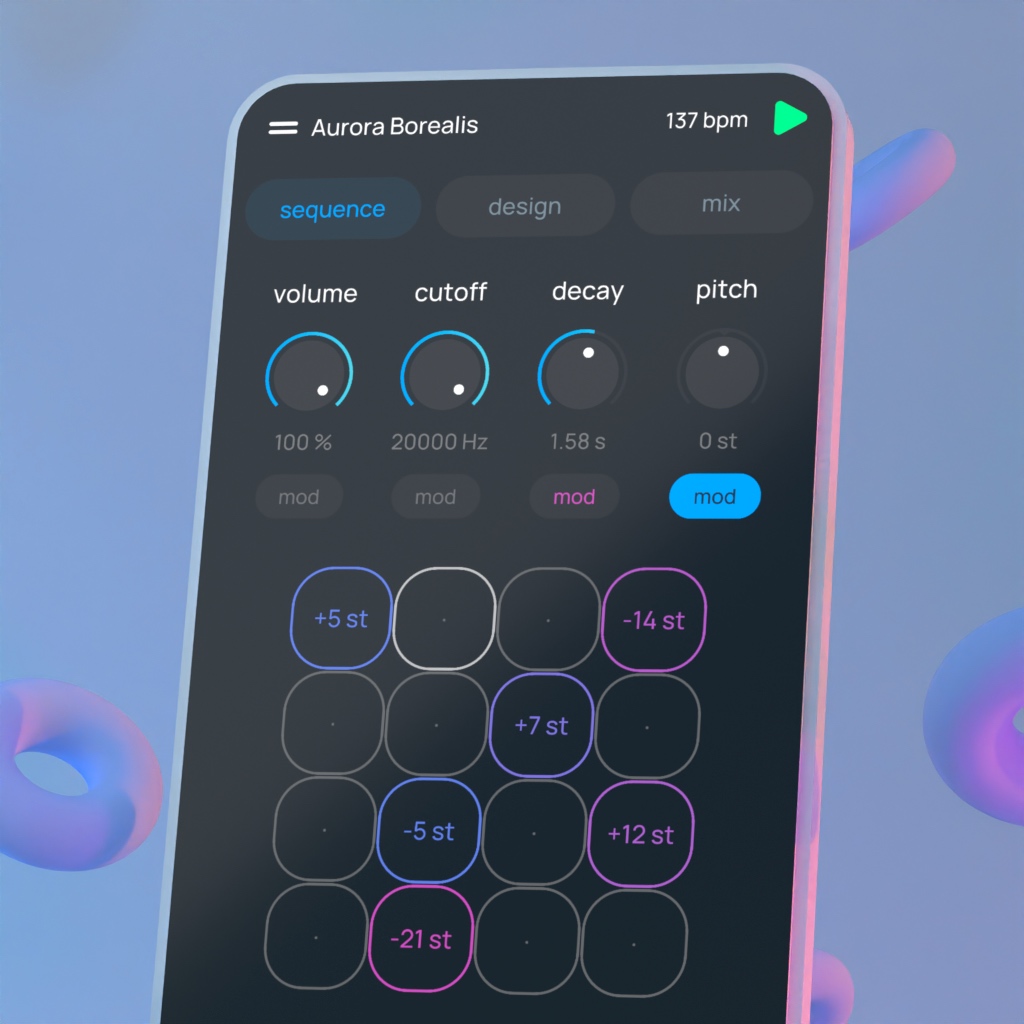
Step modulation allows you to create complex variations within seconds. Easily alter your volume, cutoff, decay, and pitch by dragging the values higher or lower.
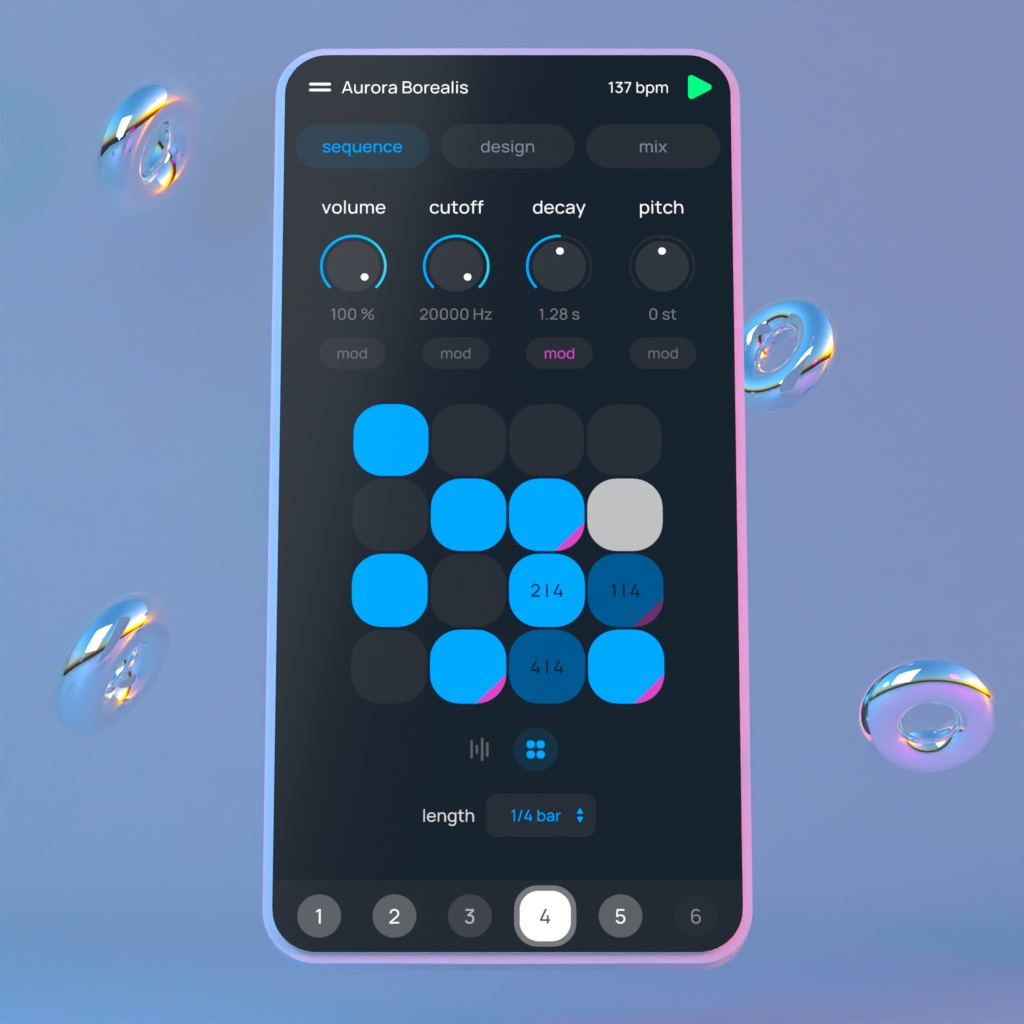
Seamlessly chain up to eight grids or bounce between patterns on the fly to keep the inspiration flowing. Each track runs at its own pace: from a chill cruise with a full bar per step to a lightning-fast 1/32 bar speed. Plus, trig conditions keep your grooves fresh by allowing you to trigger notes every two or four loops.
One of the perks of electronic music production is the variety of sounds you can experiment with. Get started with Polaris' meticulously curated sample bank, which should keep you busy for a while. Want to do it your way? Load your own samples directly into the app for limitless sonic exploration.
For even more variety, try the synth engine, featuring a dual-oscillator architecture.
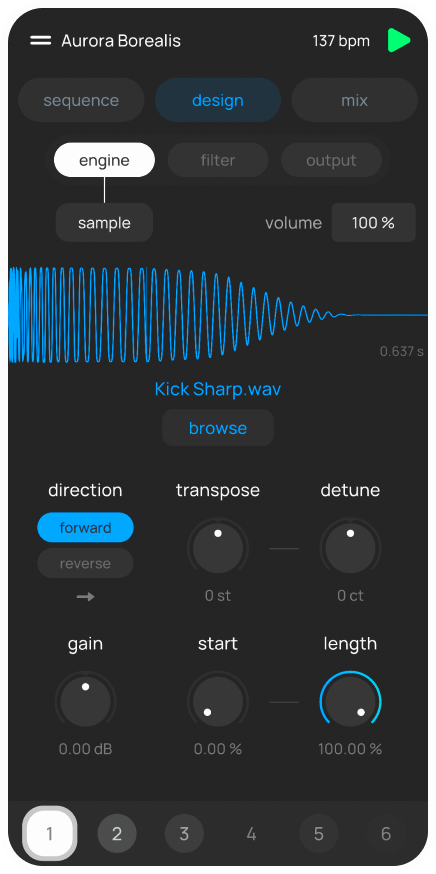
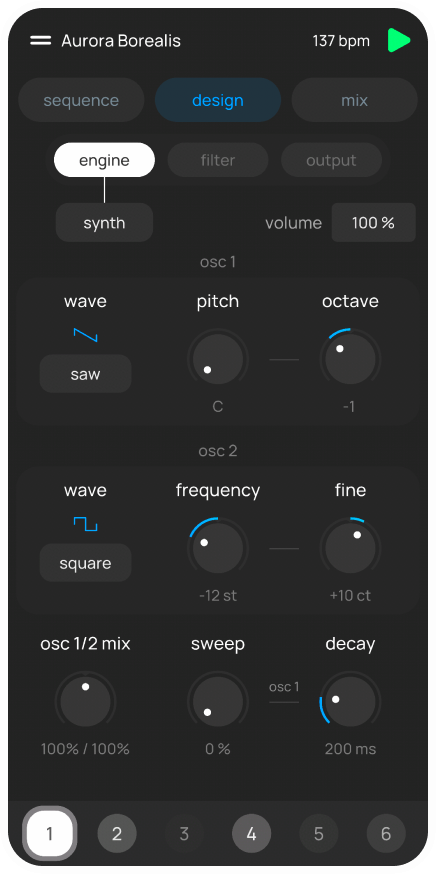
The sample and synth sound engines should cover most of your needs, from creating lush pads and deep rumbling basslines to bright plucky notes and sharp drum hits.
In addition, each track includes a multimode filter so you can sculpt your frequencies however you want, while the built-in distortion module can give you a little extra punch.
After crafting the perfect combination of sounds and sequences for your project, use mixing tweaks to magnify and fine tune your pattern.
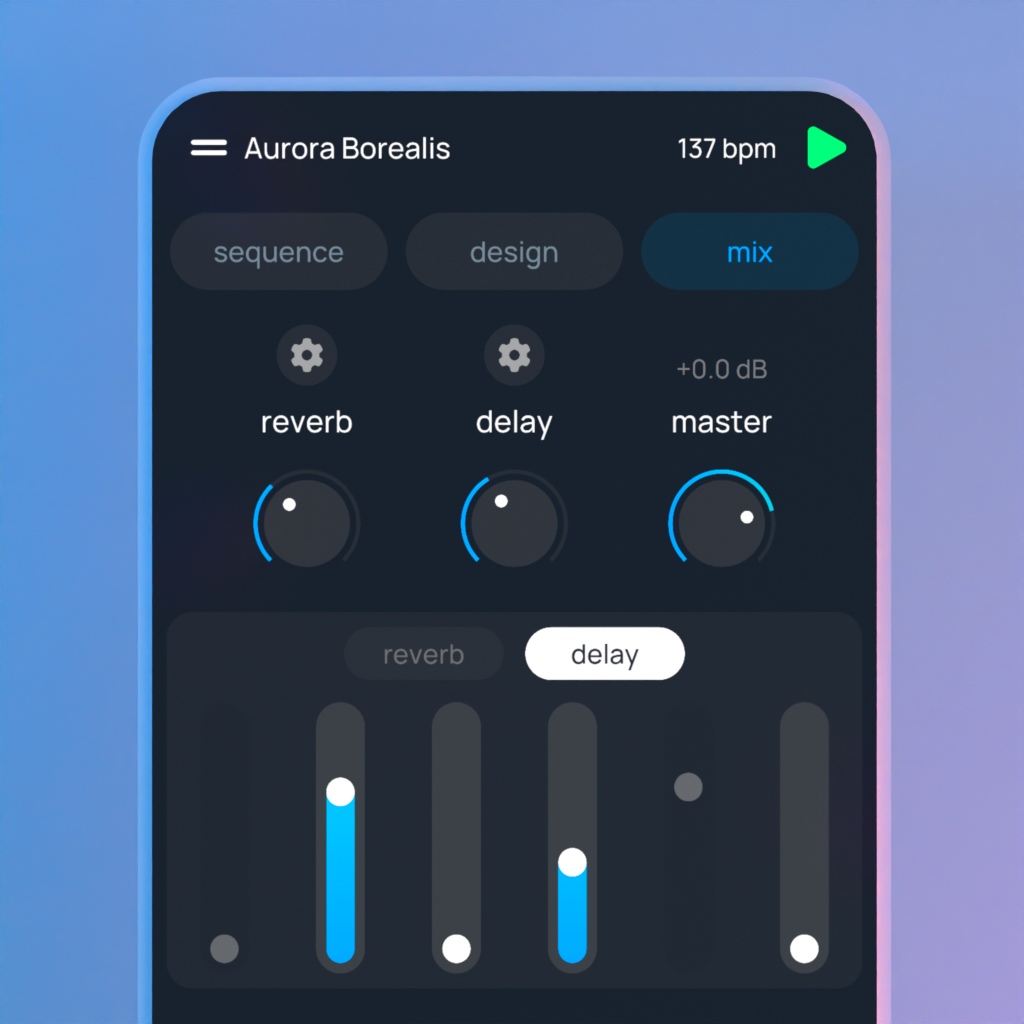
Use the reverb and delay modules to spice up the stereo image of your sound. Apply effects independently to each track to create a wider soundscape and push your sonic exploration even further.
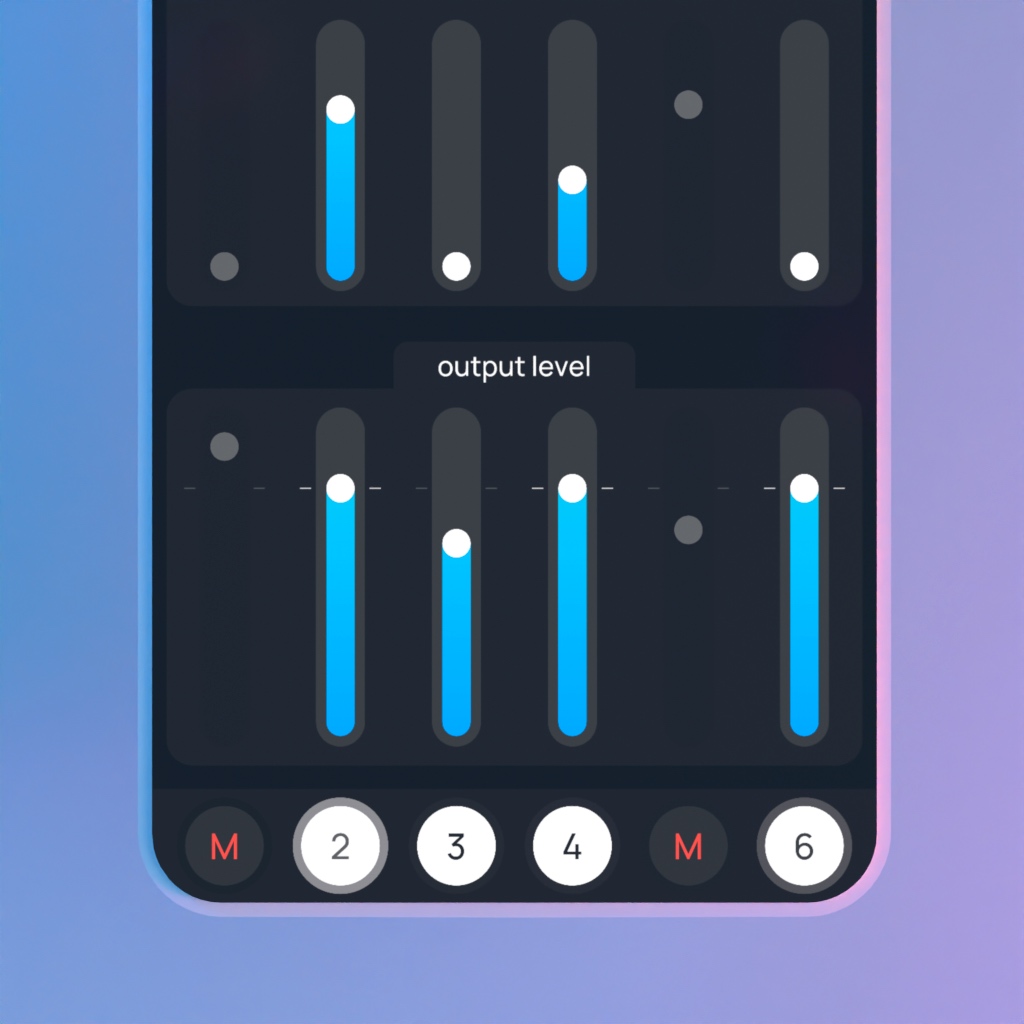
Whether you want to carefully adjust the mix between your tracks, or take advantage of the mute buttons to perform live, the virtual mixer is here for you.
Connect with other Polaris users for support and discussion. The Discord server is the spot to share community tips, report issues, and to hear first about upcoming features and releases.
 Join Discord
AUv3 plugin included in the iOS version
Beyond the glass, Irish stout has woven itself into the fabric of Irish literature and folklore. The pubs of Dublin—Davy Byrne’s, The Brazen Head, and Toners—were the offices of the Irish Literary Revival. James Joyce, in Ulysses , devoted an entire episode ("Cyclops") to the goings-on in a pub, describing the perfect pint with religious reverence. Flann O’Brien and Brendan Behan used stout as a narrative tool, a symbol of camaraderie and despair in equal measure. Historically, stout was even marketed with medical legitimacy; in the 1920s and 1930s, doctors recommended Guinness to postpartum mothers and post-operative patients due to its high iron content (a claim later found to be largely exaggerated, yet culturally persistent). This unique blend of literary glamour and pseudo-medical utility elevated stout from mere drink to national tonic.
The origins of stout are intrinsically linked to the commercial rivalry of 18th-century London and Dublin. Originally, the term "stout" referred to a strong beer, not a dark one. However, when Arthur Guinness signed a 9,000-year lease for the St. James’s Gate Brewery in Dublin in 1759, he set in motion a stylistic revolution. Guinness did not invent the dark beer known as "porter"—that was a London creation—but he perfected its heartier, more robust cousin. By using unmalted roasted barley, which imparted a sharp, acrid bitterness and a deep ruby-black hue, the Dublin brewers created a beer that was cheaper to produce than pale ales yet packed with flavor and calories. This made Irish stout the ideal drink for the dock workers, porters, and laborers who powered the Industrial Revolution. irish stout bb font free zip
What separates Irish stout from its foreign imitators is its unique sensory paradox. To the uninitiated, the beer’s obsidian opacity suggests a heavy, syrupy monstrosity. The reality is remarkably different. When poured correctly—ideally through a nitrogenated tap that forces the beer through a small disc with tiny holes—Irish stout undergoes a dramatic transformation. The nitrogen, as opposed to carbon dioxide, creates smaller, smoother bubbles and a cascading "surge and settle" effect. The result is a pint with a thick, pillowy head that tastes of coffee and dark chocolate, while the body itself remains light, dry, and crisp, with a roasted bitterness that cleans the palate. It is, as one critic noted, "a meal in a glass that leaves you hungry for the next." Beyond the glass, Irish stout has woven itself
In the contemporary era, Irish stout has successfully navigated the turbulent waters of globalization and craft beer. While Guinness remains the undisputed king—selling millions of pints daily from Dublin to Kuala Lumpur—the style has diversified. Independent Irish breweries like O’Hara’s, Porterhouse, and Murphy’s (from Cork) offer variations that challenge the status quo, introducing drier, hoppier, or even barrel-aged versions of the classic. The "Perfect Pint" culture, with its specific glasses, gas blends, and two-part pour, has become a ritual that commands respect worldwide. On St. Patrick’s Day, the consumption of Irish stout transcends nationality; it becomes a performance of Irishness for the global diaspora. Flann O’Brien and Brendan Behan used stout as
I can certainly provide a well-written essay on Irish stout. For the font, please note that I cannot distribute copyrighted font files, but I can point you to legitimate free font websites.
Below is your . The Dark Heart of Ireland: A Literary and Cultural History of Irish Stout In the pantheon of global beer styles, few are as instantly recognizable or as culturally significant as Irish stout. Far more than a simple beverage, this jet-black, creamy-headed drink is a liquid chronicle of Irish history, resilience, and identity. While many nations have their national drinks—from English ale to German lager—Irish stout occupies a unique space. It is simultaneously a working-class fuel, a literary muse, a medical recommendation from a bygone era, and a modern symbol of globalized pub culture. To understand Irish stout is to understand Ireland itself: complex, dark on the surface, but rich with unexpected depth and a smooth, welcoming finish.