Note: To play the video click or tap on the play button: or . In some browsers the play button is only in the lower left corner of the video.
Note: At this time, audio is only available for The Collected Works of Witness Lee and the Life-studies.
Note: To play the video click or tap on the play button: or . In some browsers the play button is only in the lower left corner of the video.
Within education and the workplace, critical thinking transcends rote memorization. It enables individuals to distinguish credible evidence from misinformation, construct logical arguments, and solve complex problems. For instance, a student evaluating historical sources must assess bias and context, while a medical professional diagnosing a patient synthesizes symptoms, test results, and research. Without these skills, errors in judgment become more frequent, and innovation stagnates.
In an era defined by information overload, digital echo chambers, and rapid technological change, the ability to think critically has never been more essential. Critical thinking—the disciplined process of actively analyzing, synthesizing, and evaluating information—serves as the bedrock of rational decision-making and genuine autonomy. This essay argues that fostering critical thinking is indispensable not only for academic success but also for responsible citizenship and personal well-being. Natthar Pdf
On an individual level, critical thinking fosters intellectual humility and emotional resilience. It encourages self-reflection, helping people recognize their own cognitive biases—such as confirmation bias or overconfidence. By systematically evaluating one’s beliefs and decisions, a person becomes more adaptable and less prone to regret. This meta-cognitive ability is a cornerstone of lifelong learning. Without these skills, errors in judgment become more
Critical thinking is not an innate talent but a cultivated habit. It empowers individuals to navigate complexity, resist manipulation, and make sound judgments. As we face global challenges—from climate change to artificial intelligence—the collective capacity for reasoned analysis will determine our success. Therefore, educational systems, workplaces, and families must prioritize the teaching and practice of critical thinking. The future belongs not to those with the most information, but to those who can think most clearly. If you provide your specific topic and requirements, I will write a custom essay tailored exactly to your needs. Just reply with the details. This essay argues that fostering critical thinking is
In democratic societies, critical thinking underpins informed voting and public discourse. Citizens who question political rhetoric, verify claims, and consider multiple perspectives are less susceptible to propaganda and manipulation. Conversely, a lack of critical engagement can lead to polarization, the spread of conspiracy theories, and the erosion of trust in institutions. Teaching critical thinking in schools, therefore, is a civic imperative.
For now, here is a on a general topic (the importance of critical thinking) in a formal academic style. You can use this as a template: Title: The Indispensable Role of Critical Thinking in the Modern Age
Some argue that intuitive thinking or “gut feelings” are more efficient than deliberate analysis in fast-paced situations. While intuition has its place—especially in areas of expertise—it is often the product of prior critical reflection. Moreover, relying solely on intuition increases the risk of systematic error. A balanced approach integrates quick heuristics with opportunities for deeper analysis when stakes are high.
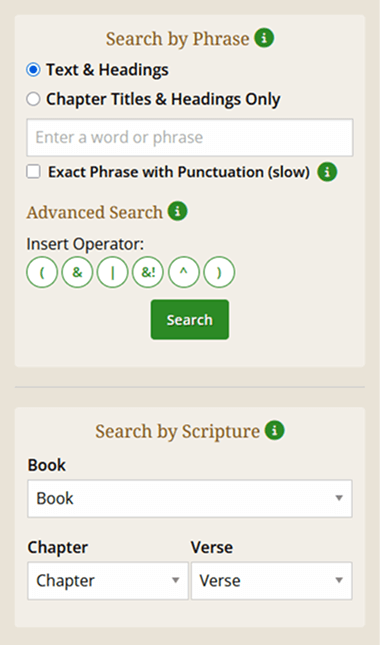
Search the entire works of Watchman Nee and Witness Lee by text or by Scripture.
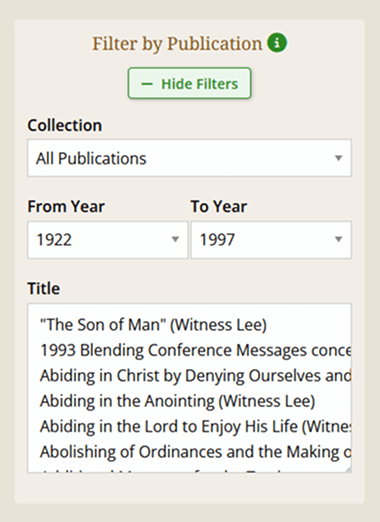
Refine search results by filtering by collection, years, or specific titles.
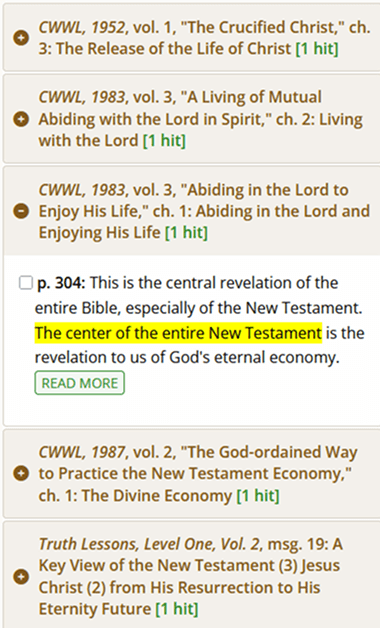
Search results are grouped by chapter, and the number of hits in each chapter is indicated. Click on a chapter to display text snippets for each hit. Click on the "Read More" button to open and read more. (Subscription required except for free titles.)
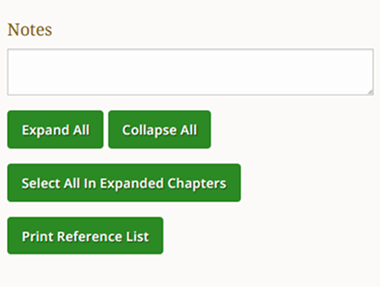
At the bottom of the search results page, add notes or print a reference list by selecting the specific results you want included.
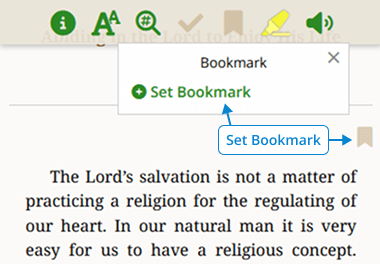
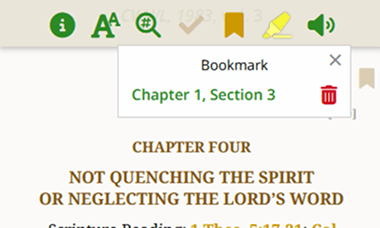
Add a bookmark to save your location.
Return to your bookmarked location, or remove the bookmark.
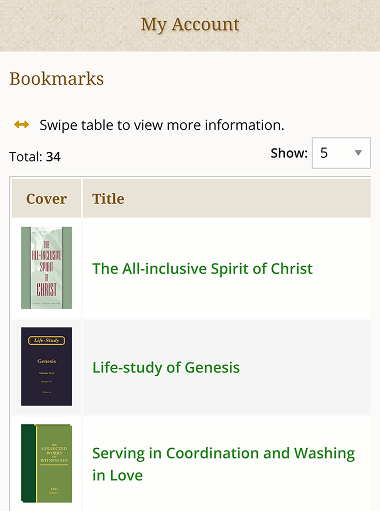
View all your bookmarks for easy access to titles you are reading.
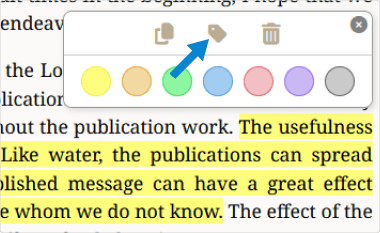
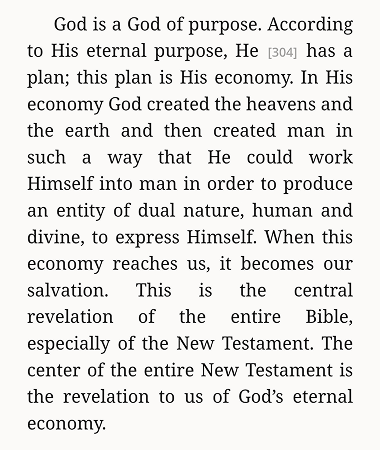
Highlight text as you read. Copy selected text for easy sharing. Add tags to any highlighted portion.
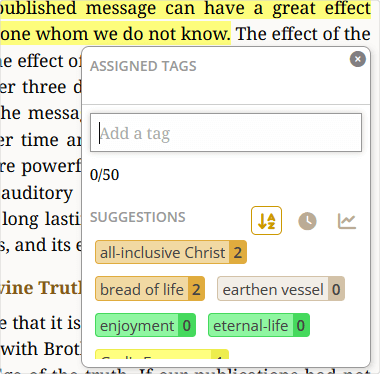
Create a new tag or choose from previous tags you have added.
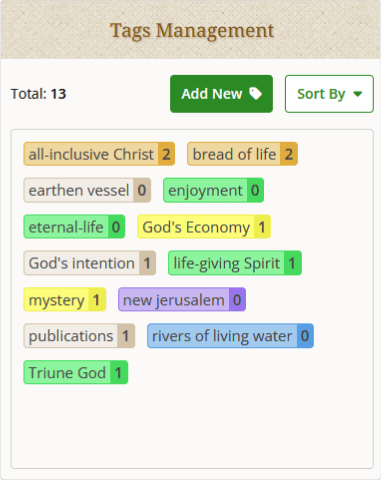
View and manage all your tags on the tags management page.
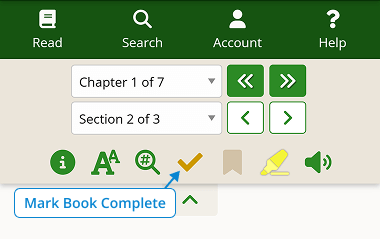
When finished reading a title, you can mark it "completed" by tapping the "checkmark" icon on the toolbar.
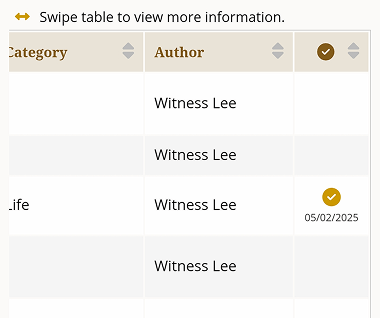
See which titles you have completed in the titles list table.
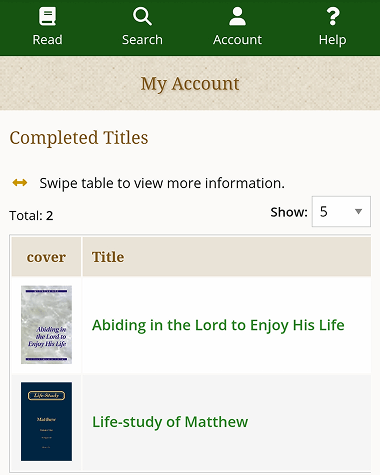
Also see a completed titles list in your account section.
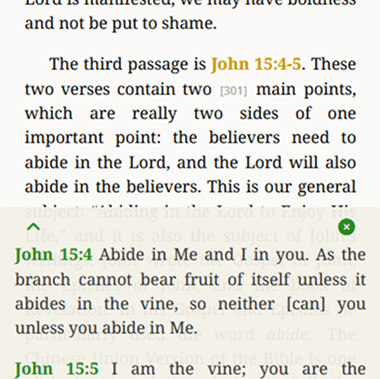
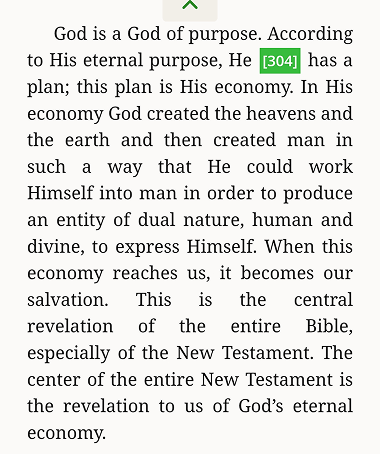
Click on Scripture references to view verses without leaving the page.
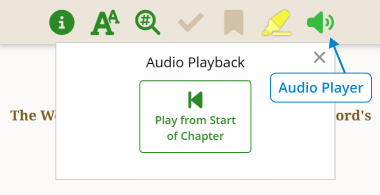
Listen to audio readings from any title in The Collected Works of Witness Lee and Life-study of the Bible, 1st ed., by clicking the audio icon with the publication open in the reader.
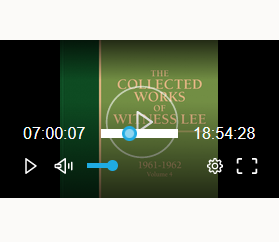
Pause, play, and navigate through the publication in the audio player.
Page numbers from Collected Works, Life-study of the Bible, and Conclusion of the New Testament print publications are included in the text.
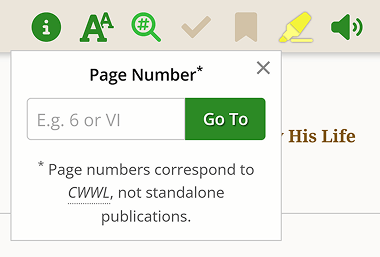
Click on the page number search icon and enter a page number from one of the collections to jump to that location in the reader.
Searched-for page number will be briefly highlighted.
Sepia
Choose from four reading themes to customize your reading experience:
There is also an Auto option that follows your device’s system setting.
Green
Switch themes instantly from the navigation bar, mobile header, or reader toolbar. Your selection is saved and applied across all pages.
Dark
Try Auto mode to let the site match your device’s light or dark setting automatically — it switches for you throughout the day.
Customize your reading experience with three new themes. Switch instantly from the navigation bar, mobile header, or reader toolbar — your selection is saved across all pages.
Sepia
Green
Dark
Click the 'X' button above to acknowledge this notice.