SPEECHTEXTER
...

Searching For- The Dark And The Wicked In-all C... -

There is a kind of evil that doesn’t announce itself with thunder. It arrives in the quiet—between breaths, in the long stare of a dying father, at the edge of a remote farm where the wind forgets to blow.

In Bryan Bertino’s The Dark and the Wicked , evil is not a test of faith. It is the answer to its absence. The film strips away comfort: no jump scares for relief, no priest with holy water saving the day. Instead, we are left with siblings returning to their childhood home to witness their father’s slow death—only to realize that something else has been waiting for them. Something that feeds on isolation, on the silence of a god who seems to have looked away. Searching for- The Dark and the wicked in-All C...

If you’re looking for a written piece (analysis, logline, or poetic reflection) on that theme, here’s a text based on interpreting your request: There is a kind of evil that doesn’t

In all Christian allegory, the devil tempts. But in The Dark and the Wicked , the demon does not bargain. It simply claims. And in that merciless certainty, the film asks a question more terrifying than “What happens after death?” It asks: What if, long before death, you are already forgotten by grace? It is the answer to its absence

Searching for the dark and the wicked in all cinema means looking past monsters with faces. True horror, Bertino suggests, lives in the ordinary turned ominous: a knife left on a counter, a whisper from a phone call with no one on the other end, a mother’s grief curdling into violence. The wicked here is not supernatural spectacle—it is inevitability. You cannot run from it because it has already decided you belong to it.

To search for the dark and the wicked is to admit that some places are not haunted—they are occupied. And the only prayer left is the one that goes unanswered.

SpeechTexter is a free multilingual speech-to-text application aimed at assisting you with transcription of notes, documents, books, reports or blog posts by using your voice. This app also features a customizable voice commands list, allowing users to add punctuation marks, frequently used phrases, and some app actions (undo, redo, make a new paragraph).

SpeechTexter is used daily by students, teachers, writers, bloggers around the world.

It will assist you in minimizing your writing efforts significantly.

Voice-to-text software is exceptionally valuable for people who have difficulty using their hands due to trauma, people with dyslexia or disabilities that limit the use of conventional input devices. Speech to text technology can also be used to improve accessibility for those with hearing impairments, as it can convert speech into text.

It can also be used as a tool for learning a proper pronunciation of words in the foreign language, in addition to helping a person develop fluency with their speaking skills.
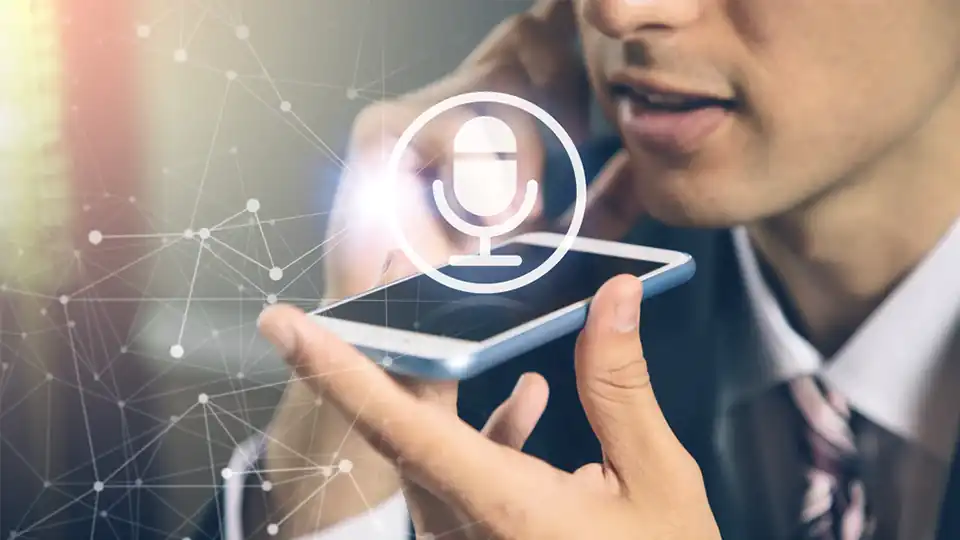
using speechtexter to dictate a text

Accuracy levels higher than 90% should be expected. It varies depending on the language and the speaker.

No download, installation or registration is required. Just click the microphone button and start dictating.

Speech to text technology is quickly becoming an essential tool for those looking to save time and increase their productivity.
Features

Powerful real-time continuous speech recognition

Creation of text notes, emails, blog posts, reports and more.

Custom voice commands

More than 70 languages supported

Technology

SpeechTexter is using Google Speech recognition to convert the speech into text in real-time. This technology is supported by Chrome browser (for desktop) and some browsers on Android OS. Other browsers have not implemented speech recognition yet.

Note: iPhones and iPads are not supported

List of supported languages:

Afrikaans, Albanian, Amharic, Arabic, Armenian, Azerbaijani, Basque, Bengali, Bosnian, Bulgarian, Burmese, Catalan, Chinese (Mandarin, Cantonese), Croatian, Czech, Danish, Dutch, English, Estonian, Filipino, Finnish, French, Galician, Georgian, German, Greek, Gujarati, Hebrew, Hindi, Hungarian, Icelandic, Indonesian, Italian, Japanese, Javanese, Kannada, Kazakh, Khmer, Kinyarwanda, Korean, Lao, Latvian, Lithuanian, Macedonian, Malay, Malayalam, Marathi, Mongolian, Nepali, Norwegian Bokmål, Persian, Polish, Portuguese, Punjabi, Romanian, Russian, Serbian, Sinhala, Slovak, Slovenian, Southern Sotho, Spanish, Sundanese, Swahili, Swati, Swedish, Tamil, Telugu, Thai, Tsonga, Tswana, Turkish, Ukrainian, Urdu, Uzbek, Venda, Vietnamese, Xhosa, Zulu.

Instructions for web app on desktop (Windows, Mac, Linux OS)


Requirements: the latest version of the Google Chrome [↗] browser (other browsers are not supported).

1. Connect a high-quality microphone to your computer.

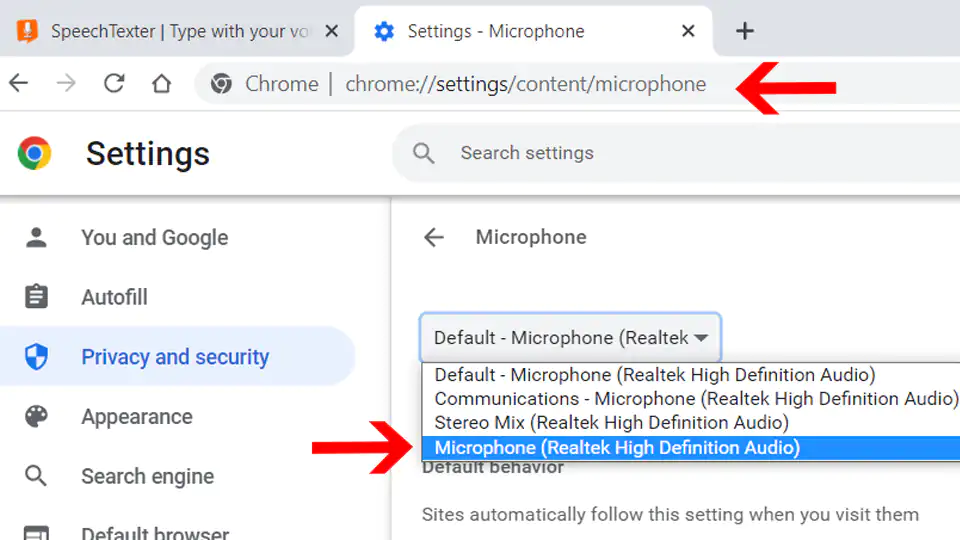
2. Make sure your microphone is set as the default recording device on your browser.

To go directly to microphone's settings paste the line below into Chrome's URL bar.

chrome://settings/content/microphone


Set microphone as default recording device

To capture speech from video/audio content on the web or from a file stored on your device, select 'Stereo Mix' as the default audio input.

3. Select the language you would like to speak (Click the button on the top right corner).

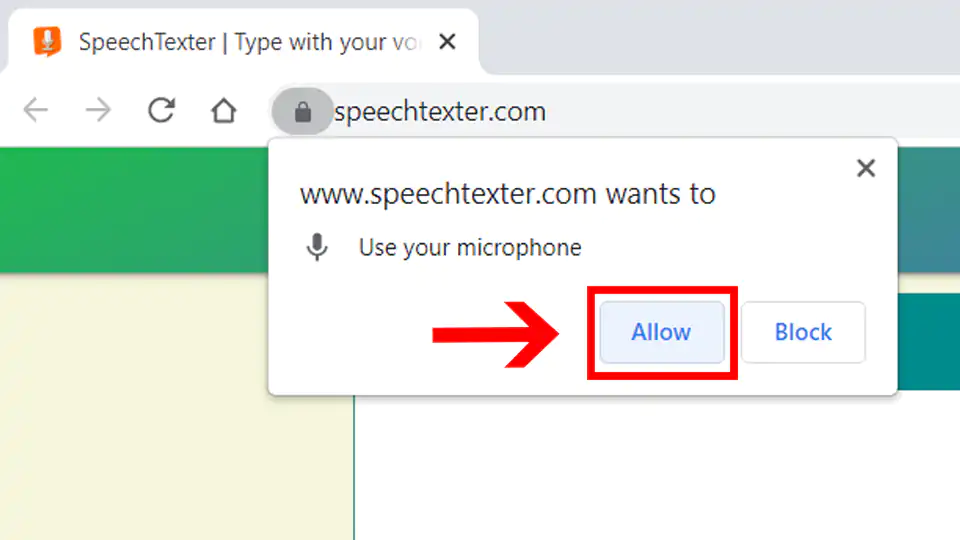
4. Click the "microphone" button. Chrome browser will request your permission to access your microphone. Choose "allow".

Allow microphone access

5. You can start dictating!

Instructions for the web app on a mobile and for the android app (the android app is no longer supported)


Requirements:
- Google app [↗] installed on your Android device.
- Any of the supported browsers if you choose to use the web app.

Supported android browsers (not a full list):
Chrome browser (recommended), Edge, Opera, Brave, Vivaldi.

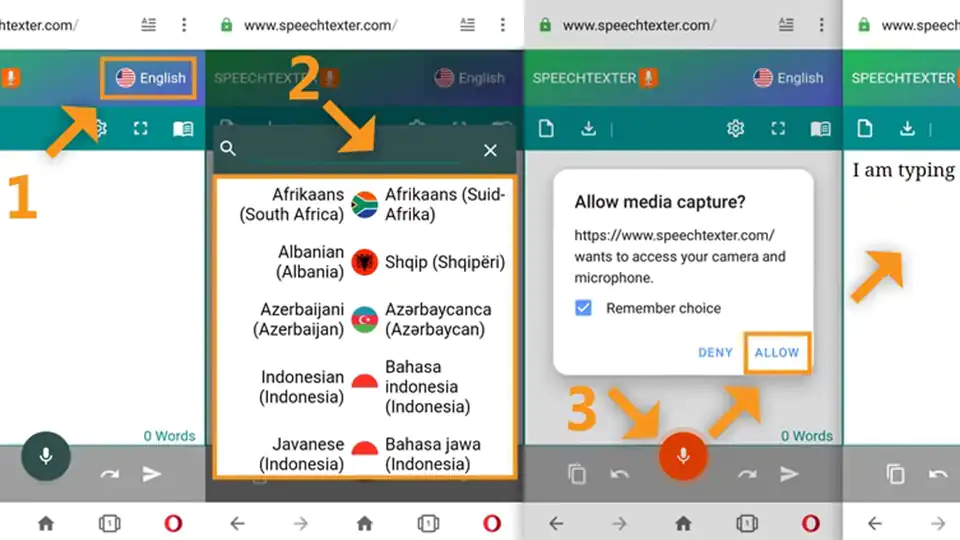
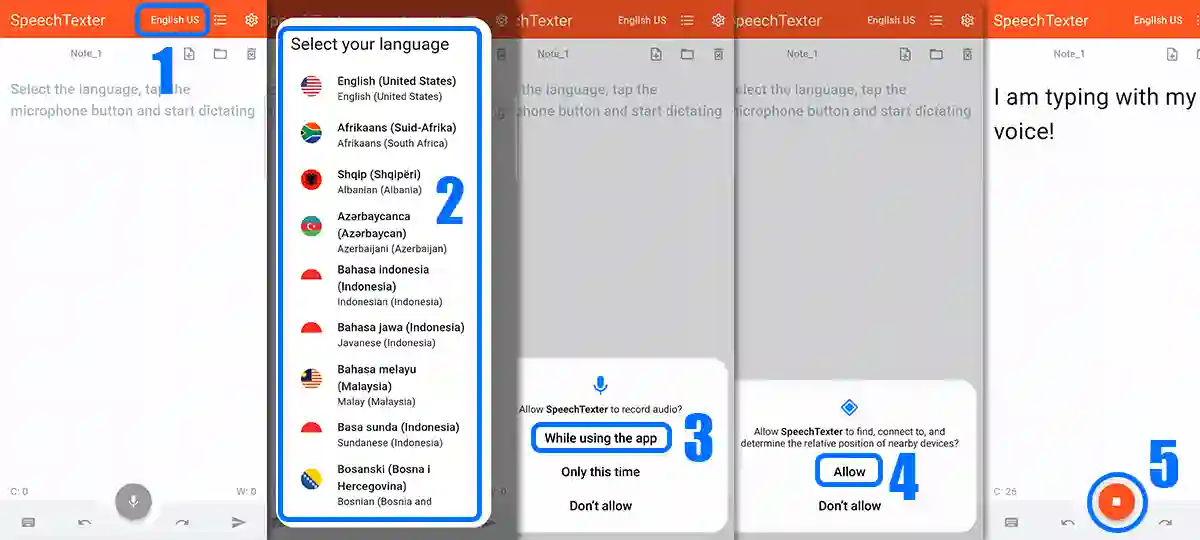
1. Tap the button with the language name (on a web app) or language code (on android app) on the top right corner to select your language.

2. Tap the microphone button. The SpeechTexter app will ask for permission to record audio. Choose 'allow' to enable microphone access.

instructions for the web app
web app

instructions for the android app
android app

3. You can start dictating!

There is a kind of evil that doesn’t announce itself with thunder. It arrives in the quiet—between breaths, in the long stare of a dying father, at the edge of a remote farm where the wind forgets to blow.

In Bryan Bertino’s The Dark and the Wicked , evil is not a test of faith. It is the answer to its absence. The film strips away comfort: no jump scares for relief, no priest with holy water saving the day. Instead, we are left with siblings returning to their childhood home to witness their father’s slow death—only to realize that something else has been waiting for them. Something that feeds on isolation, on the silence of a god who seems to have looked away.

If you’re looking for a written piece (analysis, logline, or poetic reflection) on that theme, here’s a text based on interpreting your request:

In all Christian allegory, the devil tempts. But in The Dark and the Wicked , the demon does not bargain. It simply claims. And in that merciless certainty, the film asks a question more terrifying than “What happens after death?” It asks: What if, long before death, you are already forgotten by grace?

Searching for the dark and the wicked in all cinema means looking past monsters with faces. True horror, Bertino suggests, lives in the ordinary turned ominous: a knife left on a counter, a whisper from a phone call with no one on the other end, a mother’s grief curdling into violence. The wicked here is not supernatural spectacle—it is inevitability. You cannot run from it because it has already decided you belong to it.

To search for the dark and the wicked is to admit that some places are not haunted—they are occupied. And the only prayer left is the one that goes unanswered.