
A cross platform, customizable graphical frontend for launching emulators and managing your game collection.
A cross platform, customizable graphical frontend for launching emulators and managing your game collection.
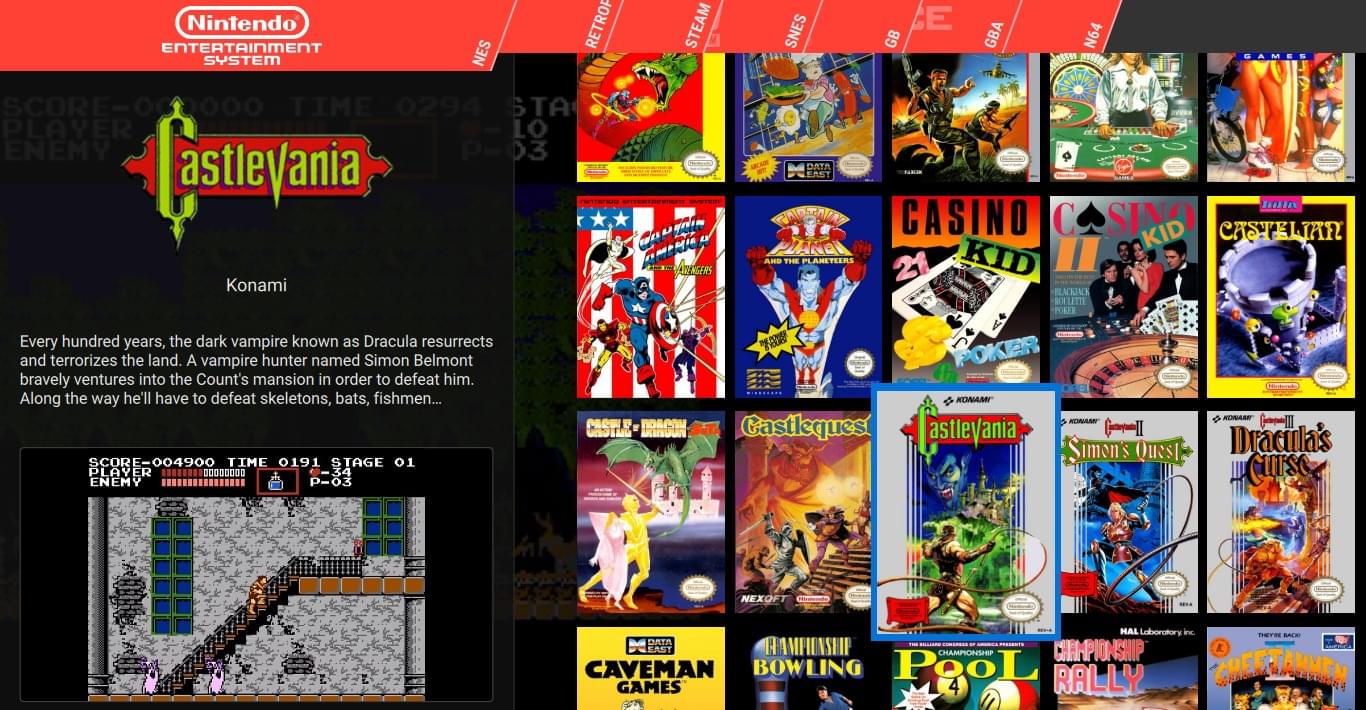
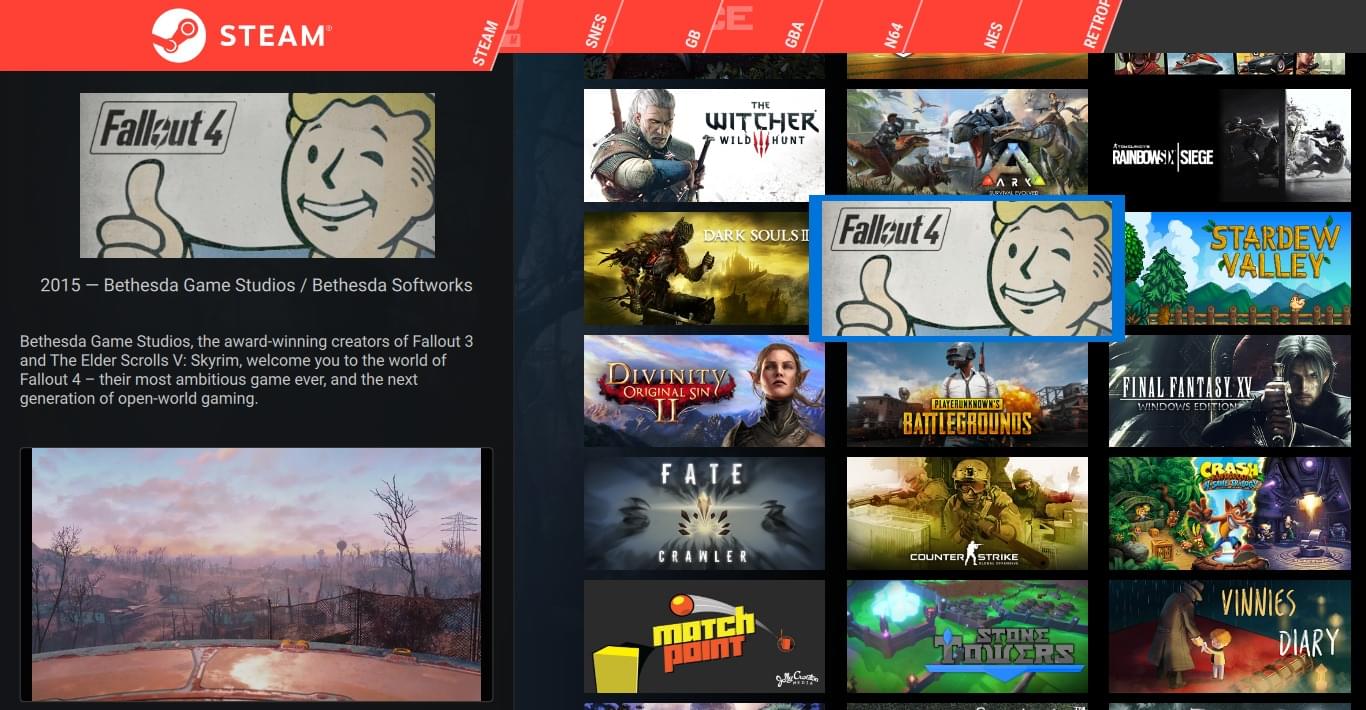
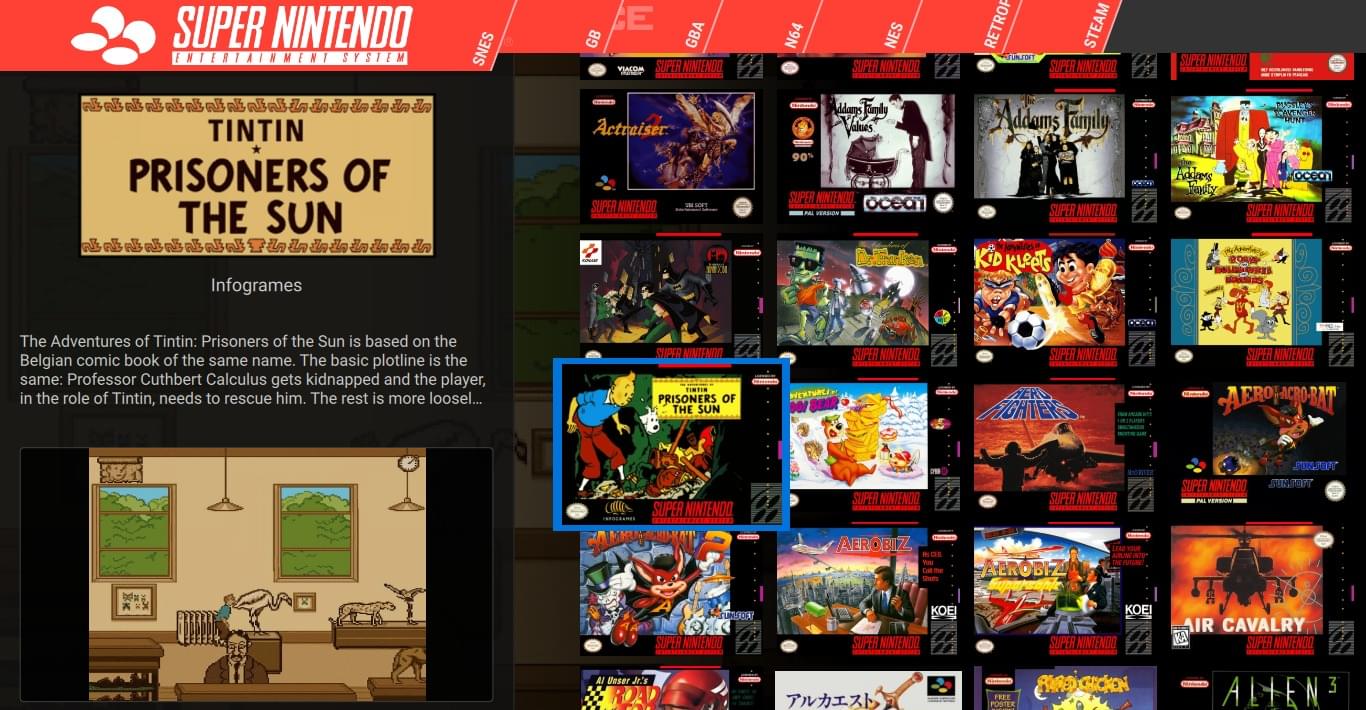
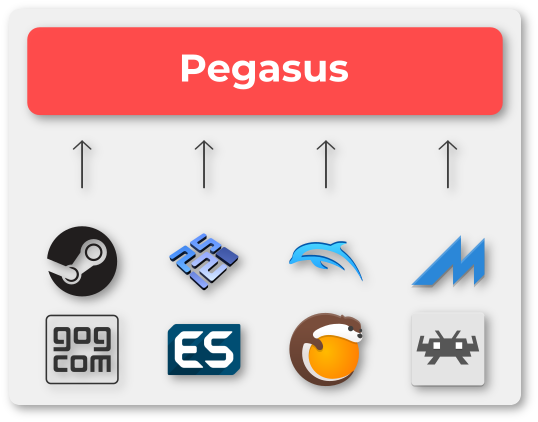
Pegasus is a graphical frontend for browsing your game library (especially retro games) and launching them from one place. It's focusing on customizability, cross platform support (including embedded devices) and high performance.
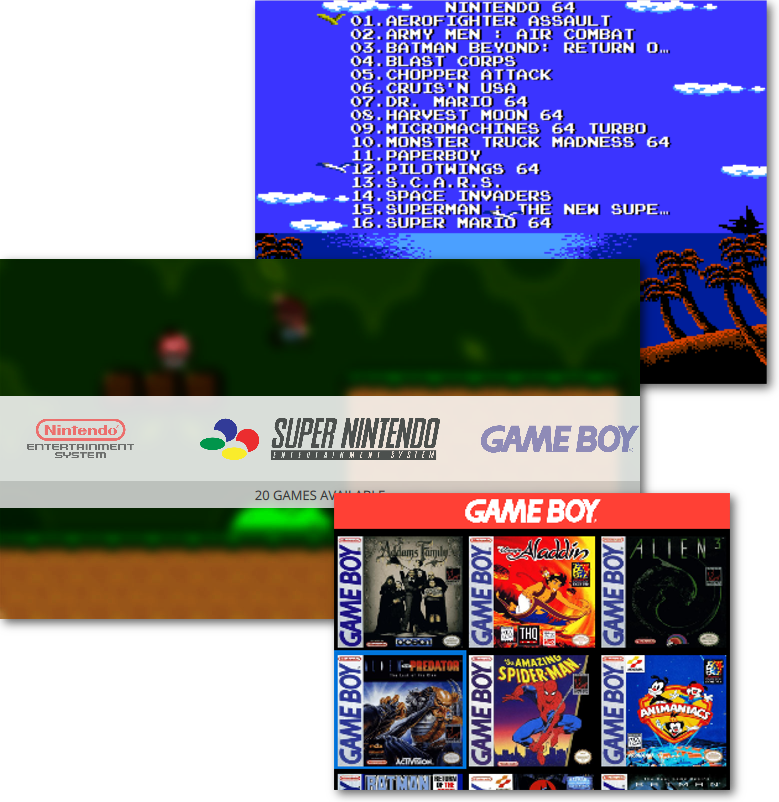
Instead of launching different games with different emulators one by one manually, you can add them to Pegasus and launch the games from a friendly graphical screen from your couch. You can add all kinds of artworks, metadata or video previews for each game to make it look even better!
With additional themes, you can completely change everything that is on the screen. Add or remove UI elements, menu screens, whatever. Want to make it look like Kodi? Steam? Any other launcher? No problem. You can add animations and effects, 3D scenes, or even run your custom shader code.
Pegasus can run on Linux, Windows, Mac, Raspberry Pi, Odroid and Android devices. It's compatible with EmulationStation metadata and gamelist files, and instantly recognizes your Steam games!
Tatsuro Yamashita (山下達郎) is widely recognized as the architect of the City Pop genre and a pioneer of high-fidelity studio production in Japanese popular music. Spanning from the mid-1970s to the present, his discography represents a fusion of American West Coast soft rock, doo-wop, funk, and Brazilian music, filtered through a distinctly Japanese urban sensibility. This paper provides a detailed chronological and thematic analysis of Yamashita’s core studio albums, examining their production techniques, lyrical motifs, and cultural impact. 1. Introduction Unlike many of his contemporaries, Tatsuro Yamashita has always prioritized the album as a cohesive artistic statement over the single-driven kayōkyoku model. A notorious perfectionist, he personally engineers his recordings using a stringent analog methodology known as "Tatsuro Yamashita Sound." His work captures the economic optimism of 1980s Japan while maintaining a timeless, nostalgic quality. This paper divides his career into four distinct periods: The Sugarbabe Years, The Breakthrough (1970s-80s), The Golden Era (1980s), and The Mature Period (1990s-present). 2. The Sugarbabe and Early Solo Work (1975–1977) 2.1. Circus Town (as Sugarbabe, 1975) Before his solo debut, Yamashita formed the band Sugarbabe. While commercially ignored at the time, Circus Town is a foundational text for modern City Pop. The album rejects the heavy psychedelic rock of the era for clean electric pianos, complex vocal harmonies, and a laid-back groove. The track "Show" features the first iteration of his signature "endless summer" aesthetic.
Often considered his magnum opus. Featuring the iconic "Sparkle" (later sampled by numerous hip-hop producers), For You perfects the formula. The production is airy; Yamashita recorded the rhythm section in a large stone hall to achieve natural reverb. Lyrically, the album focuses entirely on second-person address ("You"), creating a direct, intimate feeling. Tracks like "Love Talkin'" (Honey It’s You) demonstrate his mastery of the AOR (Album-Oriented Rock) format. 4. The Golden Era: Melodies and Pocket Music (1983–1986) 4.1. Melodies (1983) A darker, more complex album. Melodies contains "Christmas Eve," a song that would become a perennial holiday hit in Japan (despite its release in April). The album leans heavily into doo-wop and 1950s vocal arrangements. The track "Bomber" is a sarcastic critique of Japan’s bubble-era materialism, showing Yamashita’s lyrical range beyond romance. tatsuro yamashita album
Sonic Coastlines and City Lights: A Comprehensive Examination of Tatsuro Yamashita’s Studio Albums Tatsuro Yamashita (山下達郎) is widely recognized as the
Released during Japan’s "Lost Decade," Artisan is a mature reflection on middle age and domesticity. The massive hit "Get Back in Love" features a syncopated rhythm guitar pattern that became instantly recognizable. The production is warmer and less glossy than the 1980s albums, favoring upright bass over electric. It is his best-selling original studio album, proving his relevance shifted from trendsetter to national treasure. 6. The Modern Period: Ray of Hope to Softly (2002–2022) 6.1. Ray of Hope (2002) His first album in a decade. Ray of Hope introduces environmental and anti-war themes (e.g., "Kaze no Kaeru Michi"). Musically, it returns to the Ride on Time template but with 21st-century analog warmth. The album was delayed for two years due to Yamashita’s obsessive remixing. This paper divides his career into four distinct


